- 𝐒𝐭𝐚𝐛𝐢𝐥𝐢𝐳𝐚𝐭𝐢𝐨𝐧 𝐒𝐲𝐬𝐭𝐞𝐦 𝐄𝐚𝐬𝐲 𝐭𝐨 𝐅𝐥𝐲 - Featuring a cutting-edge 6-axis gyro stabilization system, this aircraft experiences a significant boost in stability, making it effortlessly controllable, even for those new to flying.
- 𝐃𝐮𝐫𝐚𝐛𝐥𝐞 𝐄𝐏𝐏 𝐒𝐭𝐫𝐮𝐜𝐭𝐮𝐫𝐞 - This RC plane is made of lightweight elastomeric foam, which offers a durable yet lightweight structure, allowing it to handle outdoor flights without damage from bumps and impacts.
- 𝟑𝐂𝐇 & 𝟐 𝐓𝐚𝐤𝐞-𝐨𝐟𝐟 𝐌𝐞𝐭𝐡𝐨𝐝𝐬 - 2 take-off methods ( hand throwing off or sliding off ) provide varied flight experiences to the pilot.Enjoy the pilot's thrill with a 3-channel control system in 3D flight practice.
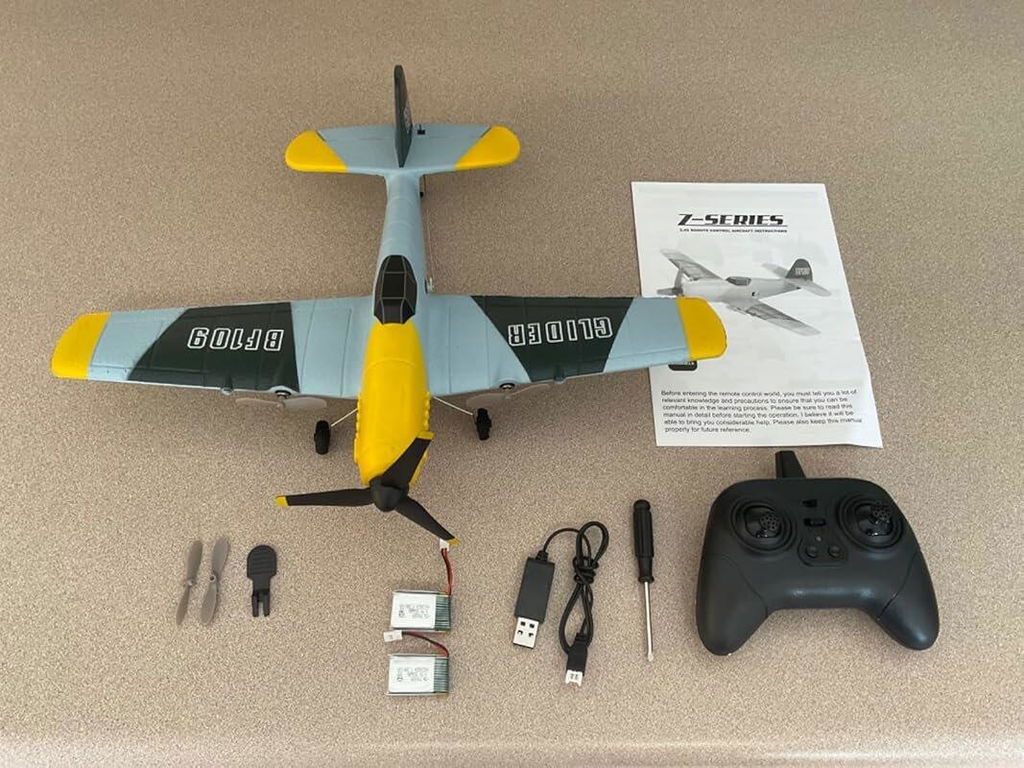
- 𝐒𝐭𝐫𝐨𝐧𝐠 𝐌𝐨𝐭𝐨𝐫 & 𝟐 𝐁𝐚𝐭𝐭𝐞𝐫𝐢𝐞𝐬 - The RC plane has dual built-in motors for added power and speed, effectively saving battery life. It includes two 3.7V 350mAh rechargeable batteries, providing approximately 20 minutes of uninterrupted flight fun.
-
𝟐-𝐒𝐩𝐞𝐞𝐝 𝐌𝐨𝐝𝐞 𝐯𝐢𝐚 𝐚 𝟐.𝟒𝐆𝐇𝐳 𝐑𝐞𝐦𝐨𝐭𝐞 - With a 2.4GHz wireless remote, you can switch between high and low speeds and enjoy a 656-foot control range, making it an excellent choice for small flying club events and a great gift for both children and adults.


Free shipping over$99


DEERC RC Plane 3 Channel BF-109 Remote Control Airplane Fighter Toys,2.4GHz 6-axis Gyro Stabilizer RTF Glider Aircraft Plane with 2 Batteries,Easy to Fly for Adults Kids Beginners Boys
Order in the next to get it between and
hoursminutes
Guaranteed Safe Checkout


R
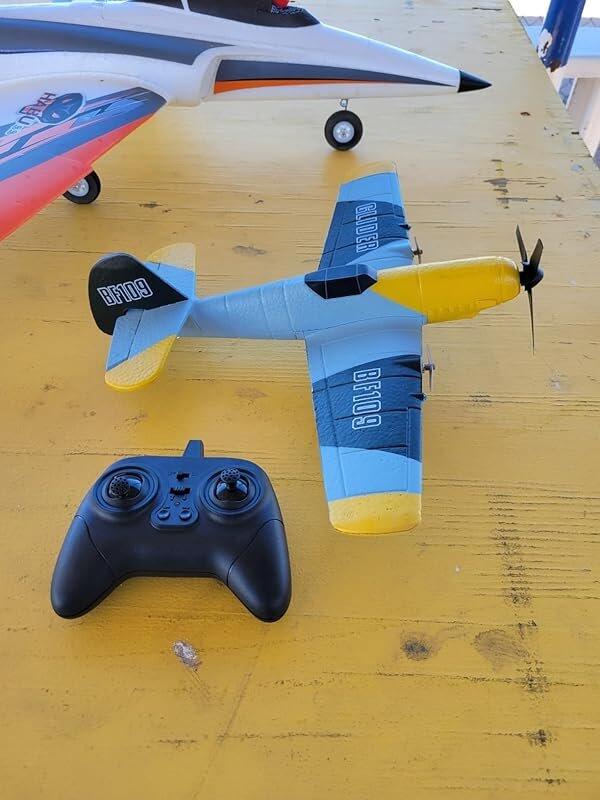
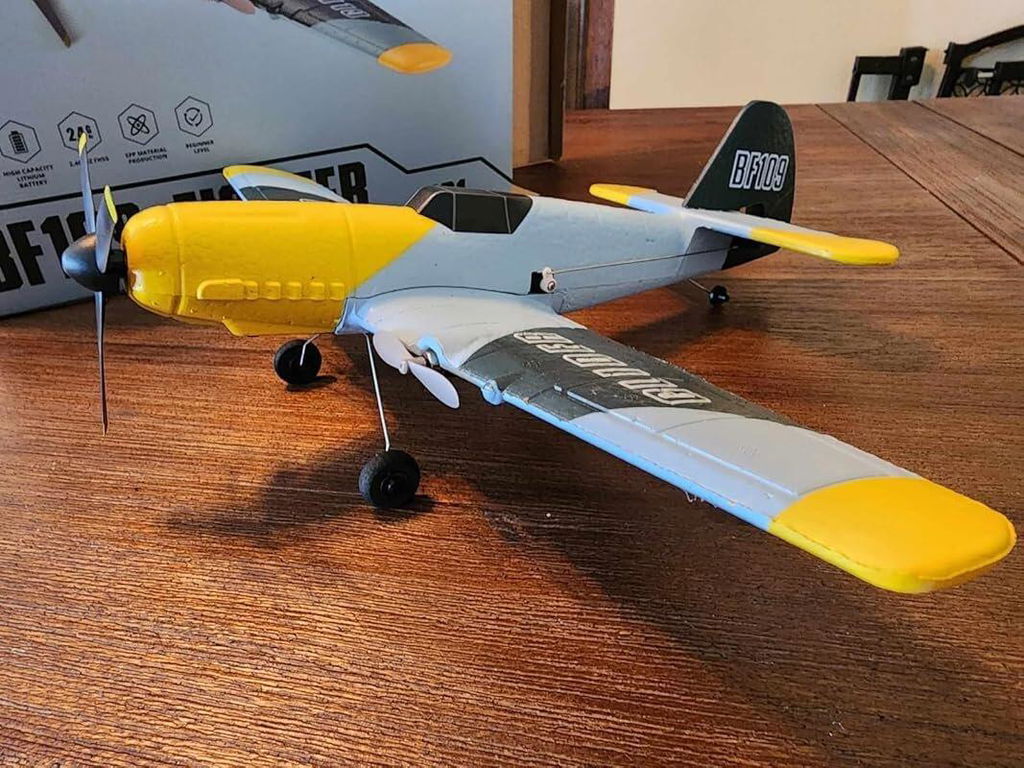
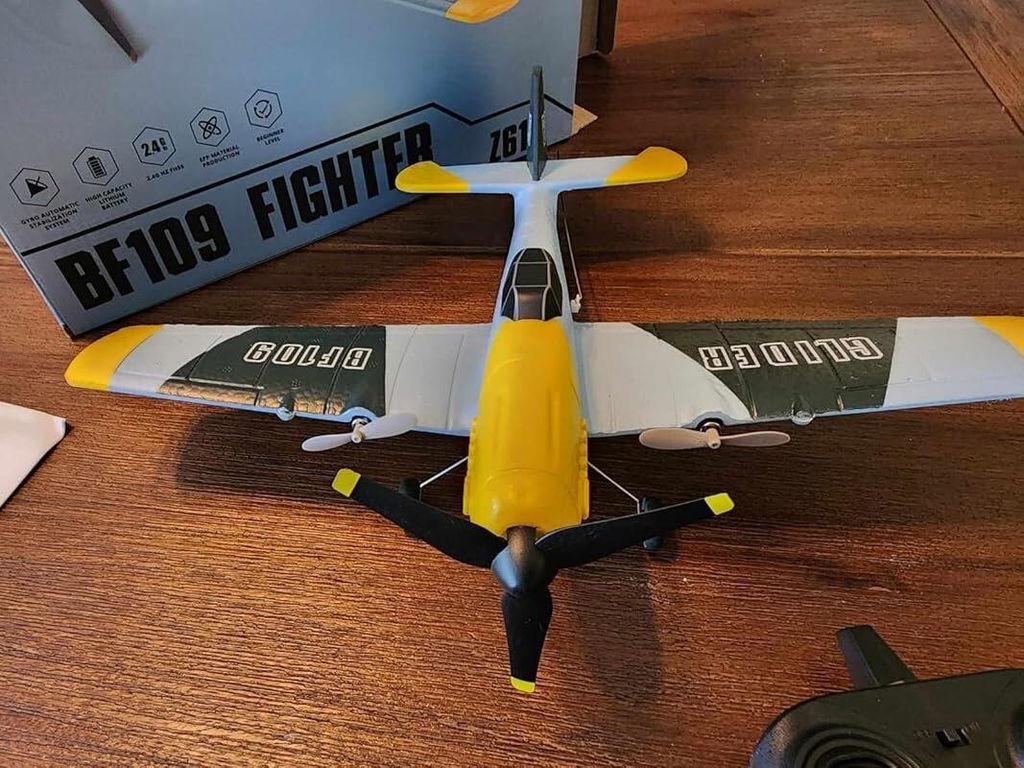
I've been flying electric R/C planes for over 6 years now, and thought it would be interesting to give one of these inexpensive planes a try. I wasn't sure what to expect of it, but I was surprised by how well it flies. I took it to our local club flying field, and some of the other pilots there also commented on how well it performs. A couple of the landings were, shall we say, less than pretty, but the plane took them in stride with no damage. The photo attached to this review was taken as I was packing up to leave, rather than before the flights. One of the club members has a young son, and now plans on getting one of these to teach his son to fly RC.Many potential buyers will appreciate that the plane is decorated in a scheme more resembling an air-racer, rather than the historical scheme of the WWII Luftwaffe. The main propellor on the plane is not powered, and spins a bit on the airflow as the plane flies. Two small motors, one on each wing, pull the plane through the air, and differential thrust provides steering. The receiver/control board includes a gyro that helps keep the plane level when no elevator input is given, making the plane easier to fly, especially for beginners. This plane comes in under the 250 gram threshold for the upcoming FAA Remote I.D. requirements, and is plenty small enough to fly in a park or vacant ball field. It's not the kind of model for impressive aerobatics, but for a first RC plane for someone interested in the hobby, it's an inexpensive option to learn the basics.The instructions that come with the plane are minimal, and one of the things that I feel should be mentioned is that the Lithium-Polymer (LiPo) batteries used in RC planes have some quirks that are important to know. While the listing estimates 20 minutes of flight time between the two batteries included, LiPo batteries should not be run until the motor quits. Additionally, LiPo batteries should not be stored at full charge. Both conditions will lead to battery damage. Plan on about 5 minutes or so of flight time, and then land the plane. If you plan to recharge the battery for another flight, allow it to cool down for a bit before connecting it to the charger. When done flying for the day, store the batteries with the partial charge remaining, and then charge them before the next flying session. Trust me on this - I learned this lesson the hard way.All in all, a fun, decent little plane for a reasonable price.
S
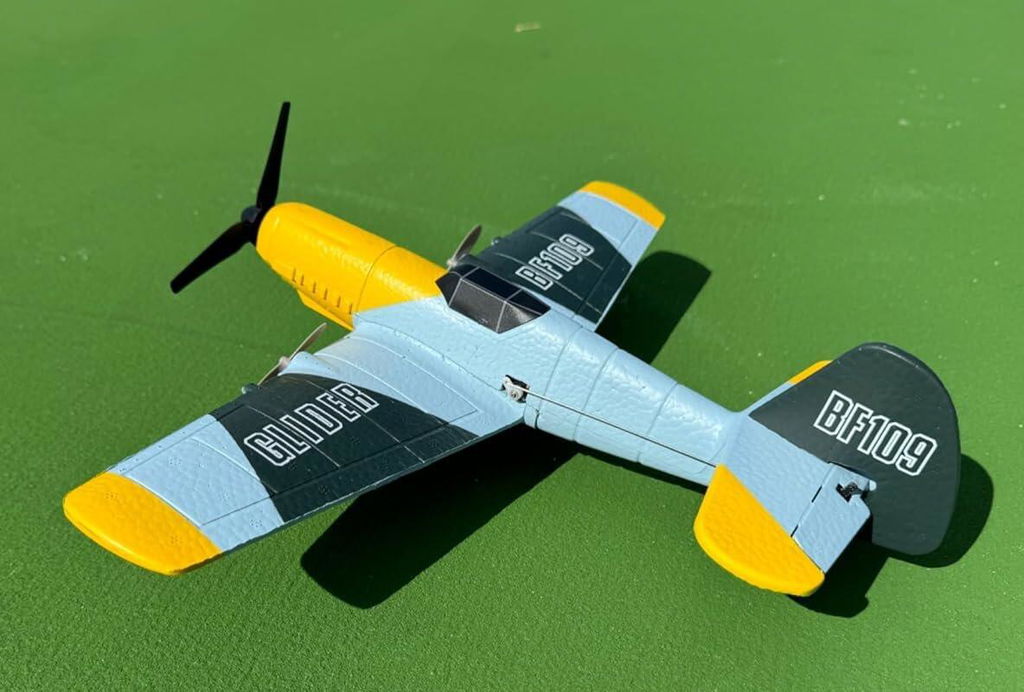
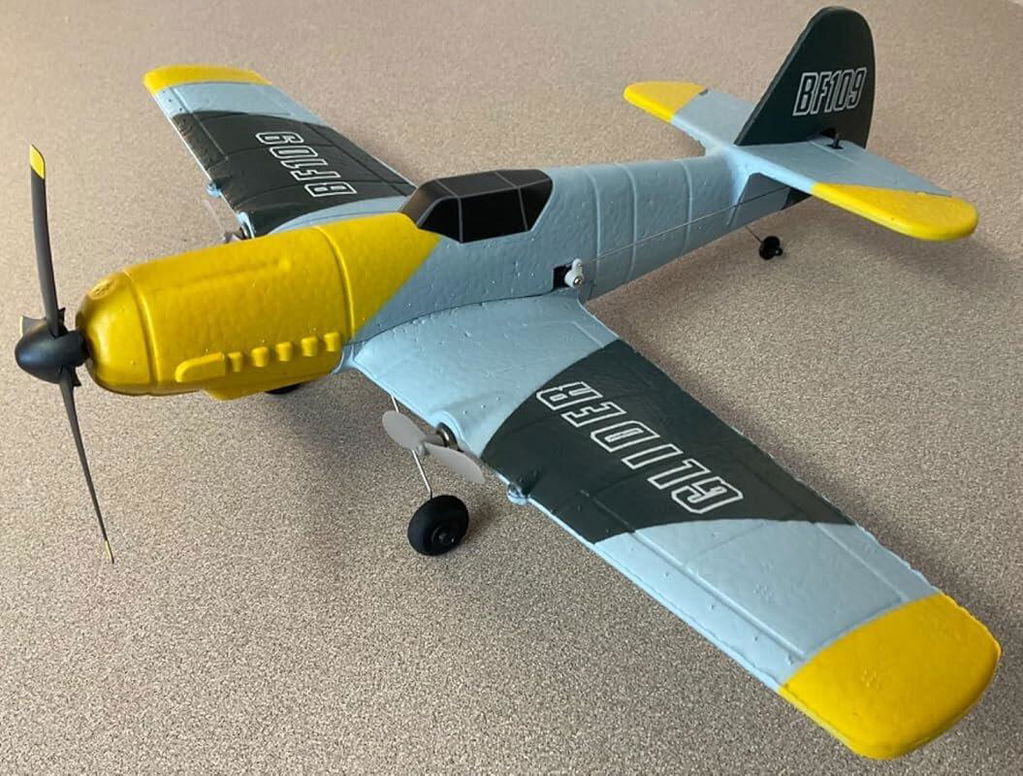
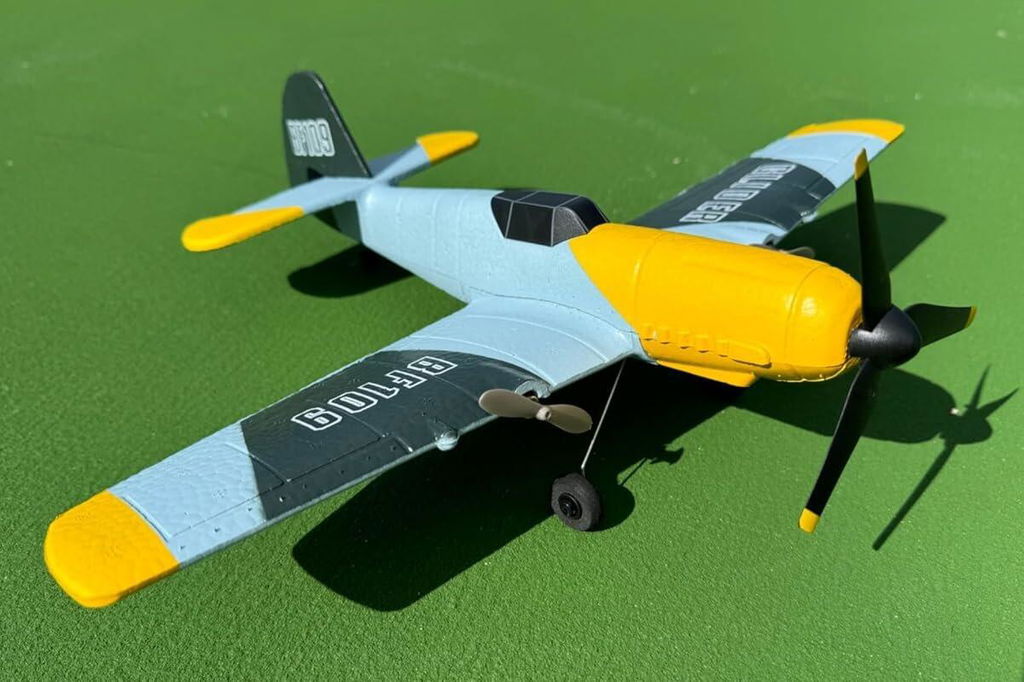
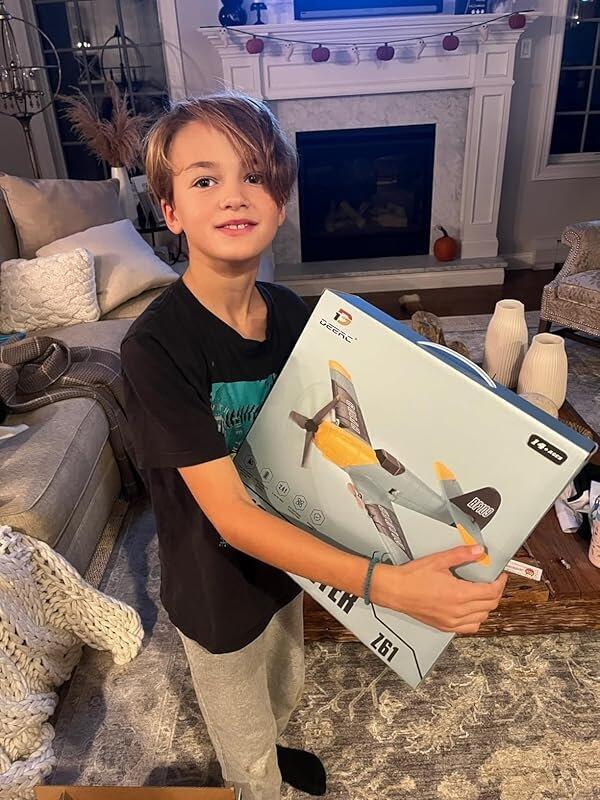
My son really likes the design. This was his first 3 channel plane and my first RC airplane. We took it out to the field and both flew it without any issues. The flight time and control distance was sufficient. I didn’t have any problems and I flew it pretty far away.I like that it has landing gear. On my first attempt I was able to land the plane successfully on the basketball court. It was easy for my son and I to fly even though we don’t have much experience flying RC planes. I like it a lot and think that this little RC airplane is a lot of fun.
n
The plane lands well. It's super stable which makes it easy to land.Grandson and son says it is awesome .I had a short video of the first flight but can't upload here .It took right off and just climbed so fastThis is going to be fun for a long time !
J
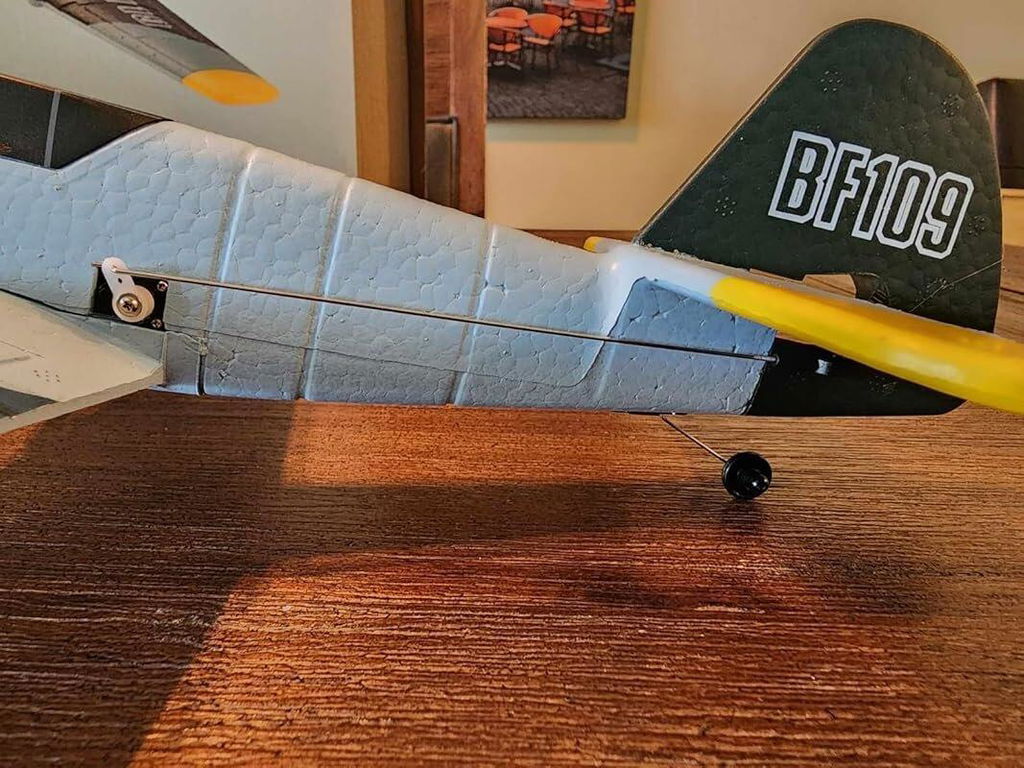
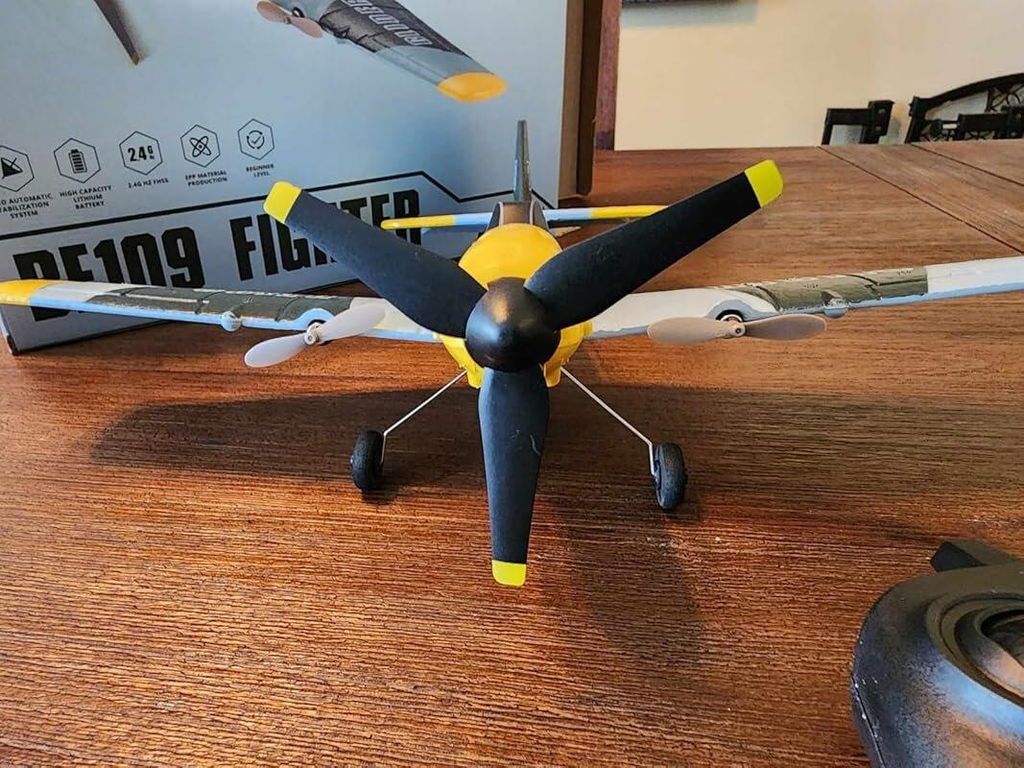
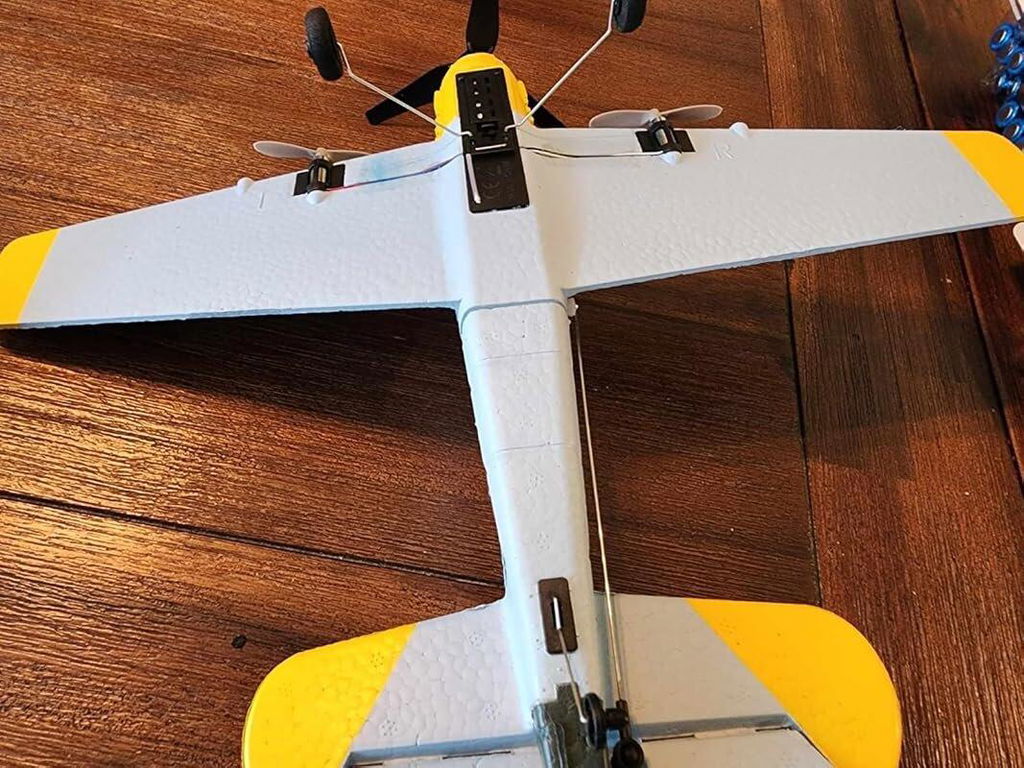
This is great starter plane. First of all, the main big black propeller does NOT turn. It is just for show. The two small gray propellers on either side of the fuselage are the working propellers that control the speed and left and right turns by reducing the power to one of the propellers. They are strong enough to take off from the ground without having to throw the plane.There is a single rod to the elevator in the back that controls the up and down motion of the plane. What is cool about this rod is that it is gyro-controlled, which means that If I am not pushing the joystick on the controller, the gyro automatically moves the elevator down if the nose dips down and moves the elevator up if the nose tips up too far. The gyro keeps the plane at level so it doesn't automatically dive and crash if I let go of the controls. That makes this plane very easy to fly. I have crashed it a few times into trees, but it is so light that it just bounces without any damage. It is a fun plane.v
C
This is the second one of these 3 channel BF109's, and for the money they are absolutely a good deal. These planes are almost too fast and can get out of in no time if you aren't paying attention or the sun hits you in the eyes. I removed the front prop and shaft from both of my planes since they are purely for aesthetics but also contribute to drag/flight time. My only real "complaint besides the fake prop, is that they could have easily added a rudder or ailerons. The differential prop thrust for rudder works just fine, but it limits how small of a space you can fly in, such as my back yard.
